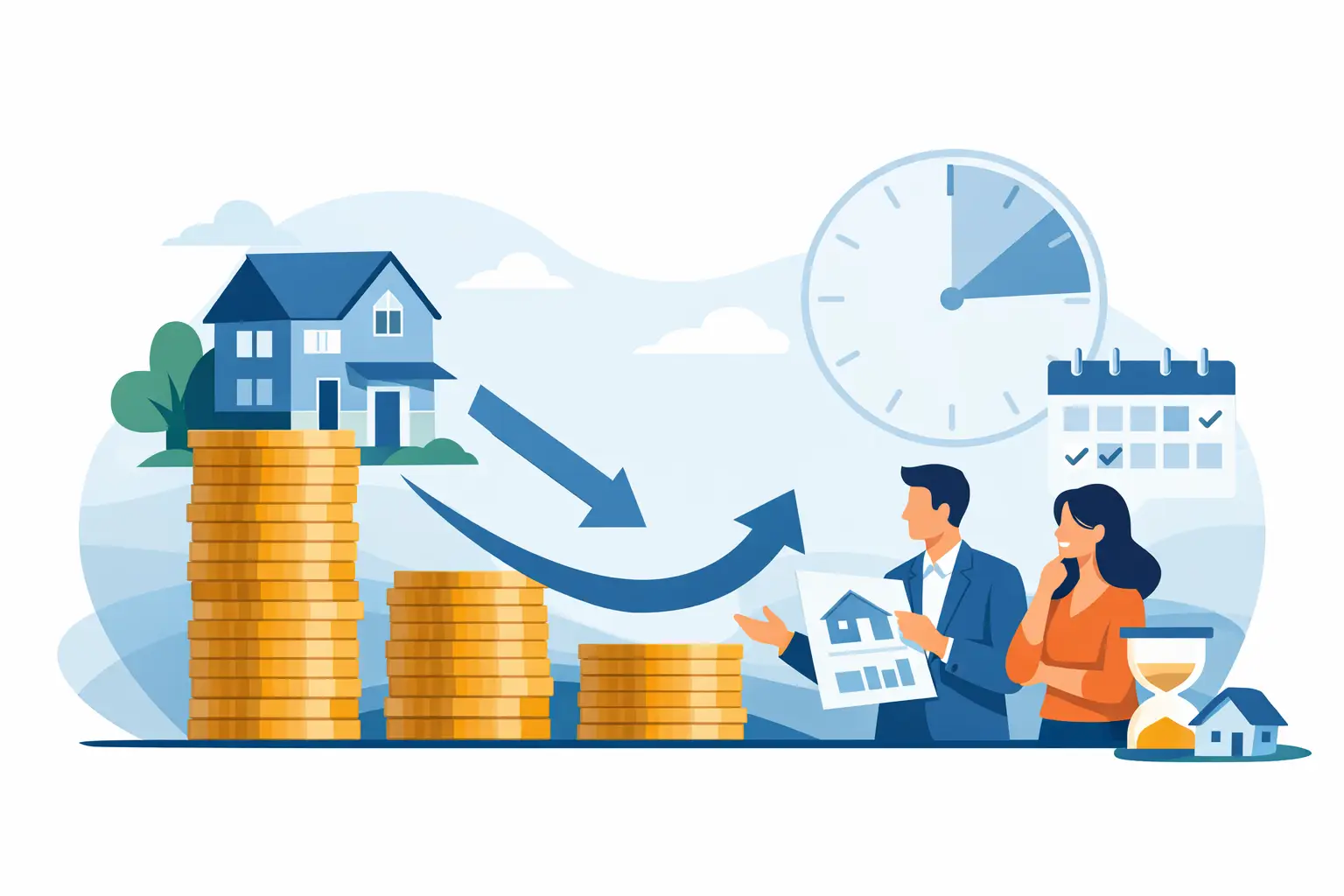
A homeowner with 22 years left on a 30-year mortgage may see an offer for a 15-year loan and immediately focus on the lower rate. That rate matters, but the bigger question is whether a refinance to a shorter term gives your household more freedom or puts too much pressure on the monthly budget. The right answer comes down to cash flow, total interest, how long you expect to keep the home, and what you want your money to do next.
A shorter loan term can be a powerful way to build equity and reduce the amount paid to borrow. It is not automatically the best move for every Texas homeowner. A clear side-by-side review can help you choose with confidence.
What It Means to Refinance to a Shorter Term
Refinancing replaces your existing mortgage with a new loan. When you choose a shorter term, you may move from a 30-year mortgage into a 20-year, 15-year, or even 10-year loan. Your new loan pays off the old one, and you begin making payments under the new terms.
The trade-off is straightforward: a shorter term usually raises the required monthly principal and interest payment, while reducing the years you pay interest. Shorter-term mortgages may also carry a lower interest rate than longer-term options, though rates, fees, credit qualifications, and loan programs all affect the offer available to you.
For example, imagine you have a remaining balance of $300,000 and 22 years left on your current loan. Refinance into a 15-year term, and the payment could rise meaningfully even if the interest rate improves. In return, you could eliminate seven years of payments and potentially save a substantial amount in total interest. The exact figures depend on your current rate, new rate, remaining balance, and closing costs.
The Biggest Benefits of a Shorter Mortgage Term
The most obvious benefit is interest savings. Mortgage interest is calculated from your outstanding balance, so paying principal down faster leaves less balance on which interest can accrue. A lower rate can add to that benefit, but even a similar rate may produce long-term savings when the repayment period is much shorter.
You also build equity more quickly. Early in a long mortgage, a larger share of each payment often goes toward interest. A shorter loan accelerates principal reduction. That can be helpful if you plan to sell later, want more financial flexibility, or simply value owning your home free and clear sooner.
For some homeowners, the emotional benefit matters too. Reaching retirement without a mortgage payment can make monthly living costs more predictable. Others want to pay off the home before helping children with college, changing careers, or pursuing a business opportunity. Those are valid goals, as long as the higher payment supports rather than strains the rest of your financial plan.
The Payment Is the Deciding Factor
A shorter term is not just a math exercise about interest savings. It changes your mandatory monthly payment. Before refinancing, look beyond what you can technically qualify for and consider what your budget can comfortably carry in a normal month and a difficult one.
Think through variable expenses such as property taxes, insurance, home repairs, child care, medical costs, and vehicle replacement. Texas homeowners should also account for potentially changing property tax and insurance costs. A payment that feels manageable today can become restrictive if those expenses rise or household income changes.
A useful test is to ask whether you could still make the new payment while continuing to save for emergencies and retirement. If the refinance would require using credit cards for regular expenses, pausing retirement contributions indefinitely, or draining savings, the faster payoff may come at too high a cost.
Some borrowers prefer to keep a longer term and make additional principal payments when cash flow allows. That approach can provide flexibility because the required payment stays lower. However, it only works if you consistently direct the extra money to principal and verify that the loan does not include a prepayment penalty. It may also produce different results than securing a lower rate on a true shorter-term refinance.
When a Refinance to a Shorter Term May Make Sense
A shorter-term refinance is often worth exploring when you have stable income, strong emergency savings, and room in the budget for a higher payment. It can be especially attractive if your current mortgage rate is noticeably higher than rates available to you, or if your credit and overall financial profile have improved since you purchased the home.
It may also fit a homeowner who refinanced into a 30-year loan years ago for payment relief but is now earning more. If your original goal was flexibility during a particular season of life, it is reasonable to revisit the loan as your circumstances change.
Timing matters as well. Closing costs reduce the savings from any refinance. Estimate how long you expect to stay in the home and compare that timeline with your break-even point. If refinancing costs $6,000 and the new loan saves $300 a month in relevant costs, a simple break-even estimate is about 20 months. But with a shorter term, the payment may rise, so total monthly payment savings is not always the right measurement. The better comparison is total remaining cost under your current loan versus total cost under the proposed loan, including closing costs.
When It May Be Better to Wait or Choose Another Option
Refinancing may not be the right move if the higher payment limits your ability to handle an unexpected expense. It may also be less appealing if you expect to move soon, if the available rate is not competitive enough to offset fees, or if you carry higher-interest debt that should be addressed first.
A homeowner nearing retirement should look carefully at income sources and liquidity. Paying off a mortgage faster can be appealing, but tying too much cash into home equity may leave less available for health care, travel, repairs, or other priorities. There is no one-size-fits-all answer.
You may have other paths. A 20-year term can lower the payment compared with a 15-year loan while still shortening repayment significantly. A cash-out refinance is generally a different conversation because it increases the loan balance, but it may be considered for a specific, well-planned purpose. In other cases, remaining in your current loan and making occasional additional principal payments provides the flexibility you need.
Numbers to Review Before You Apply
Ask for a detailed comparison rather than judging an offer by rate alone. Review the proposed principal and interest payment, annual percentage rate, loan term, estimated closing costs, cash needed to close, and the total interest expected over the life of each loan. Also confirm whether mortgage insurance, taxes, and homeowners insurance will affect the full monthly payment.
It helps to compare at least two realistic scenarios: keeping your current mortgage and refinancing into the shorter term. If you are considering extra principal payments instead, include that option too. Use the same assumptions for each comparison so the difference is meaningful.
A mortgage professional can also help identify program details that may affect the result, particularly if you have a VA loan, FHA loan, jumbo balance, or more complex income. Propi Mortgage works with multiple lending sources to help homeowners compare options based on their actual goals, not just a headline rate.
Make the Payment Serve Your Life
A shorter mortgage term can turn a long-range goal into a clear payoff date. For the right homeowner, the interest savings and faster equity growth are compelling. For another, preserving monthly flexibility may be the smarter financial choice.
Start with the payment you can sustain, then measure the savings against the costs and your plans for the home. A refinance should make your next chapter feel more secure, not leave your budget with no room to breathe.