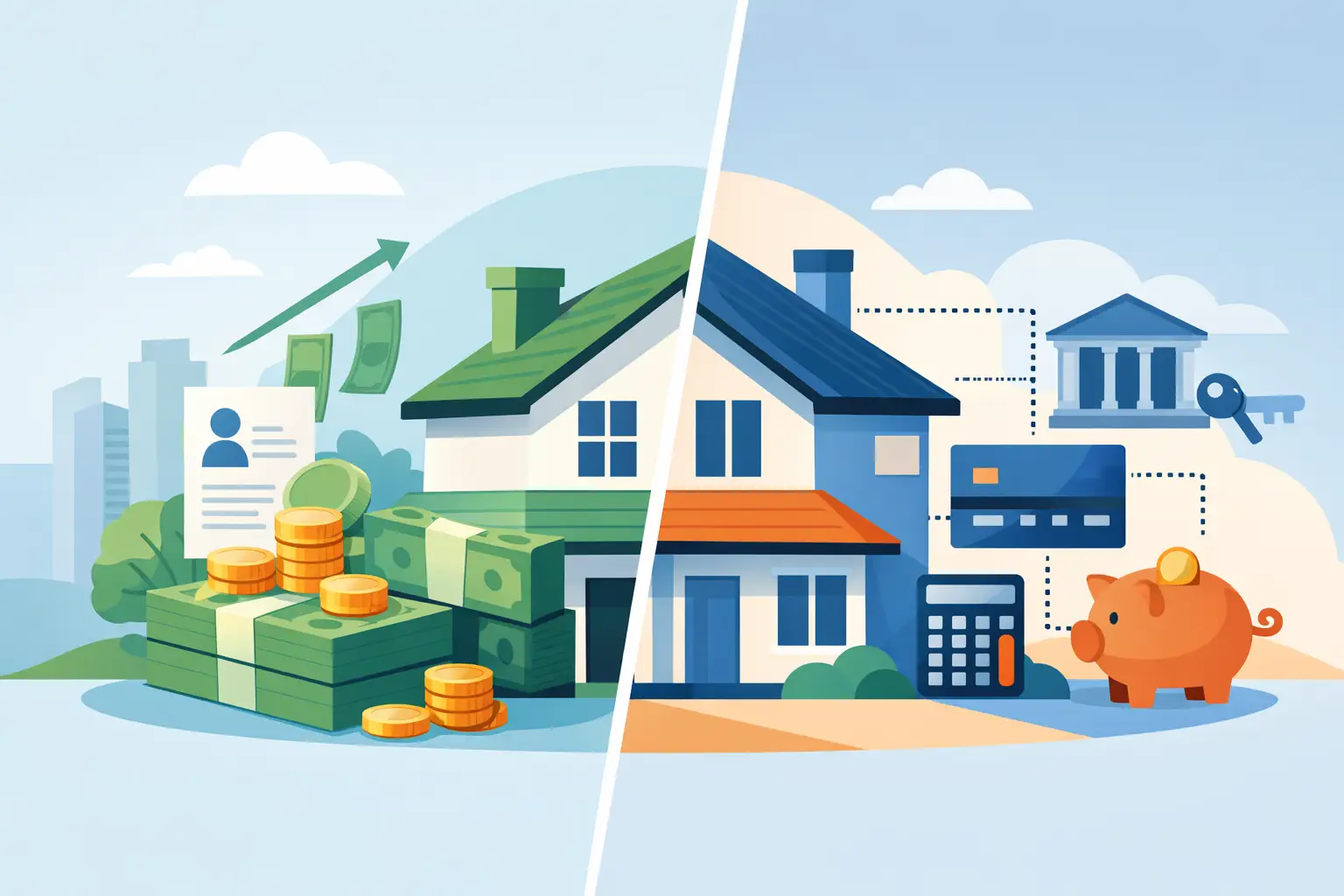
Your home equity can help fund a major project, consolidate higher-interest debt, or create breathing room during an expensive season. But the cash out refinance vs heloc decision is not simply about which option lets you borrow more. It changes how you pay, what happens to your current mortgage, and how predictable your costs will be over time.
For many Texas homeowners, the best choice comes down to one question: Do you need one defined amount now, or flexible access to funds over time? The answer can make a meaningful difference in your monthly budget.
The main difference between a cash-out refinance and a HELOC
A cash-out refinance replaces your existing mortgage with a new, larger mortgage. The difference between your new loan balance and the payoff amount on your old mortgage is delivered to you as cash at closing. You then make one monthly mortgage payment on the new loan.
For example, if your home is worth $400,000 and you owe $220,000, you may have equity available to borrow against, subject to lender guidelines and applicable state rules. With a cash-out refinance, your new loan might pay off the $220,000 balance and provide additional proceeds for your approved purpose.
A home equity line of credit, usually called a HELOC, is a separate loan secured by your home. It typically sits behind your first mortgage rather than replacing it. You are approved for a credit limit and can draw from that line as needed during a set draw period. You only pay interest on the amount you actually use.
That basic difference matters. A cash-out refinance restructures your primary mortgage. A HELOC adds a second monthly obligation while allowing you to keep your existing first mortgage in place.
How a cash-out refinance is paid back
Most cash-out refinances have a fixed interest rate and a fixed repayment schedule. Your principal and interest payment is generally predictable from month to month, although taxes and insurance can still change if they are included in your escrow payment.
This structure can work well when you know exactly how much you need. A homeowner renovating a kitchen, paying off a set amount of credit card debt, or covering a large one-time expense may prefer receiving the funds in one lump sum.
The trade-off is that you refinance the entire balance of your current mortgage, not just the cash you take out. If your existing mortgage rate is significantly lower than current refinance rates, replacing it deserves careful consideration.
How a HELOC is paid back
A HELOC often has two phases. During the draw period, you can borrow, repay, and borrow again up to your approved limit. Some HELOCs allow interest-only payments during this period, which can keep the initial payment lower but does not reduce the principal balance.
After the draw period ends, the repayment period begins. At that point, you can no longer access additional funds, and your payment may rise as you begin repaying principal and interest over a shorter remaining term.
Many HELOCs have variable interest rates. That means your payment can increase if market rates rise, even if you do not borrow another dollar. A HELOC offers flexibility, but it requires room in your budget for potential payment changes.
Cash-out refinance vs. HELOC: comparing the costs
Neither option is automatically less expensive. The right comparison depends on your first mortgage rate, how much equity you can use, how long you expect to keep the loan, and whether you need all the money now.
A cash-out refinance generally involves closing costs similar to those associated with a traditional mortgage refinance. Those costs may include lender fees, appraisal fees, title services, and prepaid items. In some cases, costs can be rolled into the new loan balance, but doing so means you are financing them and paying interest over time.
A HELOC may have lower upfront costs, though terms vary by lender. Some lines include annual fees, early closure fees, transaction fees, or minimum draw requirements. The interest rate may be lower or higher than a cash-out refinance rate depending on the market and the borrower’s profile, but the variable-rate feature adds another layer to the decision.
It also helps to compare the cost of keeping your first mortgage. If you have a low fixed rate on your current loan, a HELOC may let you preserve that rate and borrow only what you need. If your current rate is higher than available refinance rates, a cash-out refinance could potentially improve your overall mortgage structure while providing funds. Rates, fees, and approval terms must be evaluated together, not one at a time.
When a cash-out refinance may fit better
A cash-out refinance is often a stronger fit when you need a substantial, specific amount of money and want one predictable mortgage payment. It can be especially useful for a major home renovation with a defined budget, a large planned expense, or consolidating high-interest revolving debt into a fixed monthly payment.
It may also make sense when refinancing your existing mortgage is already beneficial. Perhaps your current rate is high, you want to remove mortgage insurance if eligible, or you want to adjust your loan term. In those situations, combining the refinance and cash-out goal can be practical.
Still, the monthly payment deserves close attention. Extending your mortgage term can lower the required monthly payment but may increase total interest paid over the life of the loan. A shorter term can build equity faster but may raise the payment. The goal is not simply to qualify for a loan. It is to choose a payment that supports your household plans after closing.
When a HELOC may fit better
A HELOC can be a practical option when your costs will occur in stages. Think of a home improvement project that will be completed room by room, tuition payments due across several semesters, or a repair fund you want available without taking the full amount immediately.
It can also be appealing when you want to keep a favorable first mortgage rate. Because the HELOC is separate from your first mortgage, you do not have to refinance the original balance just to access equity.
The flexibility is valuable, but only if you use it intentionally. Treating a HELOC like an open-ended spending account can make it easy to carry a balance longer than planned. Before opening one, consider how quickly you expect to repay draws and whether your budget could handle a higher rate or a larger payment when the repayment period starts.
Texas homeowners should plan around equity rules
Home equity lending rules can vary by state, and Texas has specific requirements that may affect how much equity can be accessed and how a loan is structured. These rules are designed to protect homeowners, but they can make timing, loan type, and available proceeds different from what you may see in national advertisements.
Your home’s value, outstanding mortgage balance, credit profile, income, debt-to-income ratio, and intended loan purpose all influence your options. An appraisal may be needed to establish the current value of your property. A strong estimate from an online home-value tool is useful for early planning, but it is not a final lending decision.
If you are considering a cash-out refinance, also look closely at your current loan documents. Some loans may have features, terms, or benefits you do not want to give up. This is especially relevant for homeowners with a low-rate fixed mortgage or borrowers using VA financing, where available options should be reviewed carefully.
Start with the payment you can live with
The best equity strategy is the one that supports a clear purpose and leaves your finances stronger, not tighter. Write down how much you need, when you need it, and how you plan to repay it. Then compare the full picture: your current mortgage payment, the proposed payment, interest-rate structure, closing costs, and the effect on your long-term goals.
A personalized review can turn a confusing choice into a manageable one. Propi Mortgage can help homeowners compare available loan structures and understand how each path may fit their budget, property, and plans. Before tapping your equity, give yourself the confidence that comes from seeing the numbers clearly and choosing a payment that still lets you enjoy the home you have worked hard to build.