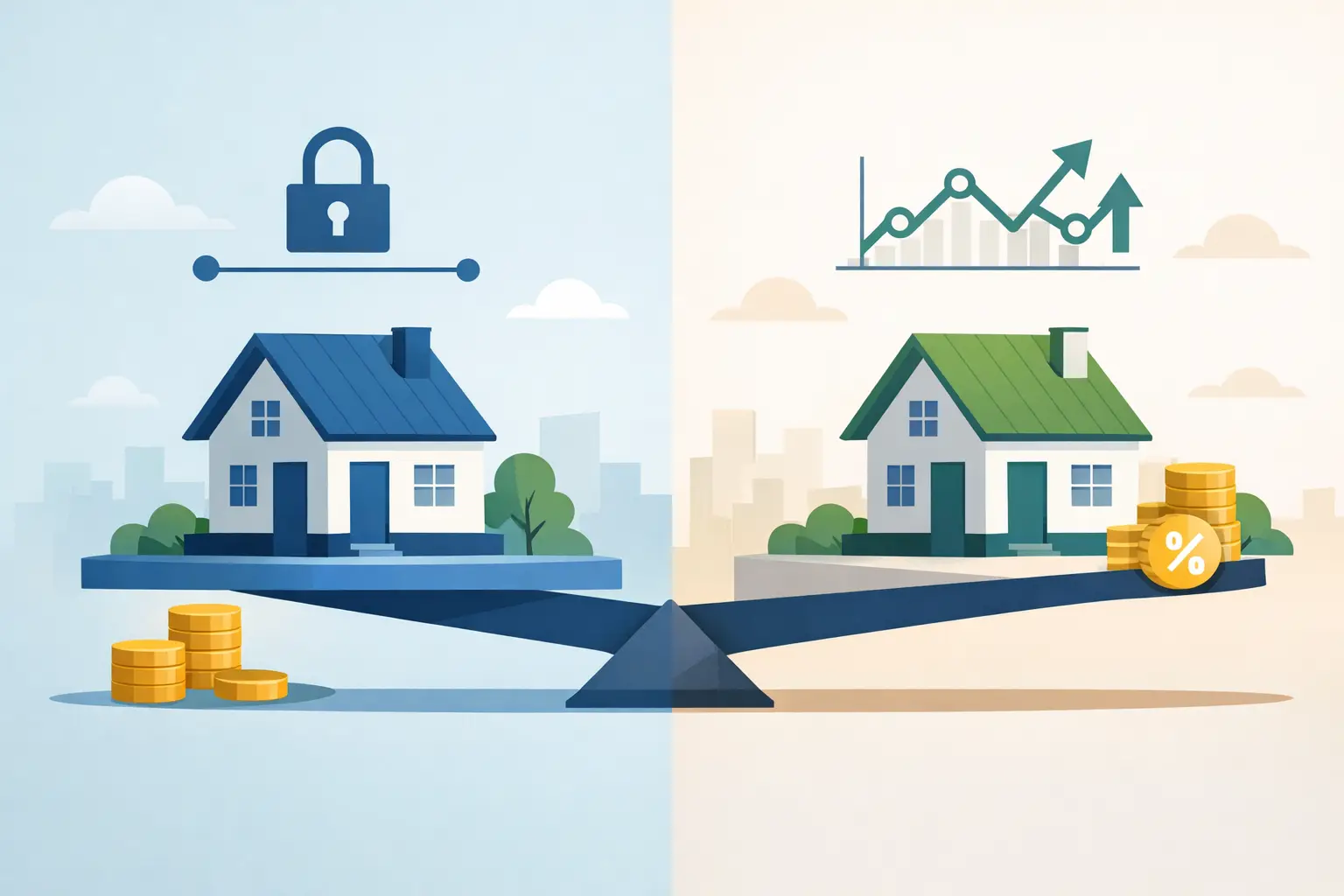
A quarter-point difference in rate can feel huge when you are shopping for a home. But the bigger question is often whether you want that rate locked in for the long haul or only for the first few years. When comparing a fixed vs adjustable mortgage, the right answer usually comes down to how long you plan to stay, how much payment change you can handle, and what gives you the most confidence moving forward.
This is one of the most common decisions buyers face, especially first-time buyers trying to balance affordability with stability. It also matters for homeowners who are refinancing and want to lower payments now without creating problems later. The key is not picking the loan with the lowest starting number. The key is choosing the loan structure that actually fits your life.
Fixed vs Adjustable Mortgage: The Core Difference
A fixed-rate mortgage keeps the same interest rate for the entire loan term. If you choose a 30-year fixed loan, your principal and interest payment stays predictable for 30 years. Taxes, insurance, and HOA dues can still change, but the loan rate itself does not.
An adjustable-rate mortgage, often called an ARM, starts with a fixed rate for an introductory period and then adjusts based on market conditions. A 5/6 ARM, for example, typically keeps the initial rate for five years and then can adjust every six months after that. A 7/6 or 10/6 ARM works the same way, just with a longer fixed period up front.
That difference sounds simple, but it affects your budget, your risk level, and your options later on. Fixed loans offer consistency. ARMs may offer a lower initial rate, but they come with more uncertainty after the introductory period ends.
When a Fixed-Rate Mortgage Makes More Sense
If you like certainty, a fixed-rate mortgage is usually the easier loan to live with. You know what your principal and interest payment will be next year and five years from now. That kind of stability matters when you are planning around childcare, retirement savings, college costs, or just the reality of everyday life.
A fixed loan often makes sense if you plan to stay in the home for a long time. The longer you hold the mortgage, the more valuable that rate stability becomes. This is especially true when rates are still reasonable and you want to protect yourself from future increases.
It can also be a better fit if your budget is tight. An adjustable loan might start lower, but if a payment increase later would strain your finances, the early savings may not be worth the risk. Peace of mind has real value.
For many buyers in Texas, where housing goals can shift from starter homes to long-term family homes, a fixed loan provides room to settle in without wondering what the mortgage will look like a few years down the road.
The trade-off with fixed rates
The trade-off is straightforward. Fixed loans often begin with a higher rate than an ARM. That can mean a higher monthly payment at the start and, in some cases, slightly less buying power. If your top priority is keeping the initial payment as low as possible, fixed may not always win on day one.
Still, some borrowers gladly accept that higher starting payment because it buys predictability. They are not paying for excitement. They are paying for stability.
When an Adjustable-Rate Mortgage Can Be the Better Option
An adjustable-rate mortgage is not automatically risky or wrong. In the right situation, it can be a smart financial move.
If you know you will likely sell the home before the fixed period ends, an ARM may save you money. Someone buying a home they expect to keep for five to seven years, for example, might benefit from the lower introductory rate without ever reaching the adjustment period.
An ARM can also work well for borrowers expecting a clear income increase. A medical resident early in training, a buyer planning to relocate for work, or a homeowner who intends to refinance before the first adjustment may see real advantage in the lower initial payment.
Some buyers use ARMs strategically to improve short-term cash flow. That can help them qualify more comfortably, free up money for renovations, or reduce monthly pressure during the first years of ownership. But this only works if the future plan is realistic, not wishful thinking.
The risk side of an ARM
The biggest concern with an adjustable-rate mortgage is payment shock. Once the fixed period ends, the rate can rise. Most ARMs include caps that limit how much the rate can increase at each adjustment and over the life of the loan, but your payment can still go up significantly.
That means you should never choose an ARM based only on the introductory rate. You need to understand the index, the margin, the adjustment schedule, and the caps. More importantly, you need to ask a practical question: if rates rise, could I still comfortably afford this home?
If the answer is no, the loan may be too aggressive for your situation.
Fixed vs Adjustable Mortgage Costs Over Time
A lot of borrowers focus only on the first monthly payment. That is understandable, but it is not enough.
With a fixed mortgage, your long-term cost is easier to project. You know the rate, the payment schedule, and how much interest you will pay over time unless you refinance or pay the loan down early.
With an ARM, the early years may cost less, but the long-term total depends on where rates go. If rates stay favorable and you move or refinance early, an ARM might come out ahead. If rates climb and you keep the loan longer than expected, the cost picture can change fast.
This is where honest planning matters. People often say they will refinance later, but refinancing depends on future rates, home value, credit, income, and timing. It is an option, not a guarantee.
Questions to Ask Before You Choose
The best mortgage choice usually becomes clearer when you stop thinking in abstract terms and start looking at your actual plans.
How long do you expect to keep the home? If the answer is ten years or more, fixed often deserves a close look. If the answer is three to five years, an ARM may be worth considering.
How stable is your income? If your financial picture is predictable and you want a dependable payment, fixed may align better. If your income is expected to grow and you have strong reserves, an ARM could offer flexibility.
How much risk can you tolerate? Some borrowers are comfortable managing uncertainty if it creates savings now. Others sleep better knowing the rate will not change. Neither mindset is wrong, but the loan should match the person.
Are you choosing based on strategy or pressure? There is a big difference between using an ARM as a planned short-term tool and using it because it is the only way to stretch into a higher price range. The second situation deserves caution.
Why local guidance matters
Mortgage decisions are never made in a vacuum. Your loan choice has to work with your purchase price, down payment, credit profile, and long-term goals. It should also reflect the reality of your local housing market.
For example, a buyer in a fast-moving market like San Antonio or Austin may feel pressure to maximize affordability upfront. That is understandable. But speed should not override fit. A lower starting payment looks good on paper, yet the better loan is the one you can live with comfortably after closing.
This is where personalized advice matters. A good mortgage advisor will not just quote rates. They will walk through payment scenarios, explain how an ARM could adjust, and help you compare the short-term savings against the long-term exposure. At Propi Mortgage, that kind of conversation is part of helping buyers choose financing with confidence, not just get to the closing table quickly.
There is no one-size-fits-all answer
If you want payment stability, plan to stay put, or simply do not want future rate uncertainty hanging over your budget, a fixed mortgage is often the stronger choice. If you expect to move, refinance, or use the home for a shorter window, an adjustable mortgage may create real savings.
The smart move is not chasing the lowest teaser rate or assuming fixed is always safest. It is looking closely at your timeline, your comfort level, and your margin for change. The right loan should support your goals now and still make sense if life does not go exactly according to plan.
Before you choose, ask for side-by-side payment scenarios and make sure you understand more than the headline rate. A mortgage should feel manageable on your best days and your ordinary ones too. That is usually a better guide than any market prediction.