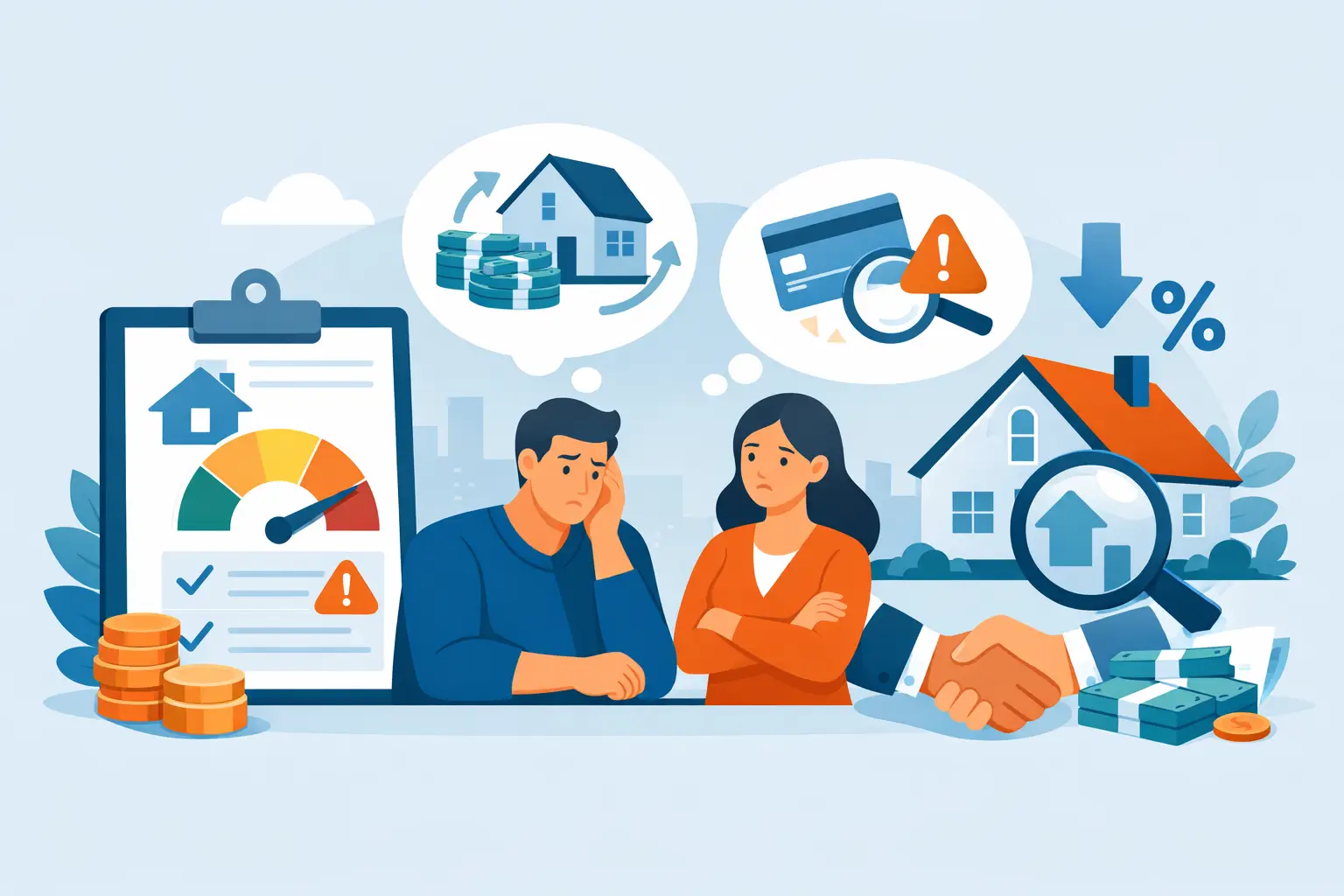
A higher mortgage payment can start to feel a lot heavier when your credit score has dropped since you bought your home. Maybe rates were better when you first closed. Maybe other debts piled up, or life simply got expensive. If you are wondering how to refinance with bad credit, the good news is that a lower score does not always shut the door. It just changes which options make sense and how carefully the loan needs to be structured.
Refinancing with credit challenges is less about finding a magic number and more about understanding the full picture a lender sees. Your score matters, but so do your income, home equity, payment history, debt load, loan type, and reason for refinancing. In many cases, borrowers who assume they will be denied actually have workable paths forward.
How to refinance with bad credit starts with the right question
The first question is not whether you can refinance. It is whether refinancing helps your situation enough to justify the cost. That matters because a refinance is still a real loan with closing costs, qualification standards, and trade-offs.
If your goal is to lower your monthly payment, a new loan term or a lower rate could help. If your goal is to remove mortgage insurance, switch from an adjustable rate to a fixed rate, or tap equity through a cash-out refinance, the math changes. Some borrowers with bad credit can refinance, but the new loan may not improve their finances as much as expected.
That is why it helps to look at the total outcome, not just whether you get approved. A slightly lower rate may not matter if fees are too high. A cash-out refinance may solve a short-term problem but increase long-term costs. A good lender will walk through those scenarios clearly instead of pushing a one-size-fits-all answer.
What lenders look at besides your credit score
When credit is less than ideal, lenders tend to examine the rest of the file more closely. They want to know whether the mortgage is still a safe risk and whether the refinance serves a reasonable purpose.
Your payment history is a big factor. If you have stayed current on your mortgage, that can help offset a weaker score. Lenders also look at your debt-to-income ratio, which compares your monthly debt obligations to your gross income. Even with bad credit, stable income and manageable monthly debt can strengthen the application.
Home equity matters too. If your property has gained value or you have paid down the balance, a lower loan-to-value ratio can improve your options. Borrowers with more equity often have access to better pricing and more flexibility because the lender is taking on less risk.
The reason your score dropped also matters. A temporary medical issue, a period of unemployment, or high credit card utilization may be viewed differently than a pattern of missed housing payments. Not every credit profile tells the same story.
Loan options that may help
The best refinance path depends heavily on the loan you already have and what you want the new loan to accomplish.
If you currently have an FHA loan, an FHA Streamline Refinance may be worth exploring. This option is often more forgiving than a standard refinance because it is designed to help existing FHA borrowers lower their rate or payment with less documentation. Credit standards can still apply, but the process may be simpler than a full conventional refinance.
VA borrowers may have access to an Interest Rate Reduction Refinance Loan, often called an IRRRL. For eligible homeowners, this can be one of the more flexible refinance options available, especially if the goal is to reduce the rate or move into a more stable payment structure.
For conventional loans, bad credit does not automatically mean impossible, but it usually means tighter qualification. You may need stronger income, more equity, or a lower debt ratio to make the file work. If your score is below the preferred range, rates and fees may also be higher.
Cash-out refinances are often the toughest fit for borrowers with bad credit. Because you are increasing the loan amount and pulling equity out of the home, lenders usually apply stricter standards. It can still be possible, but this is where careful cost review becomes especially important.
How to improve your chances before you apply
If refinancing is not urgent, a little preparation can go a long way. Even modest credit improvement can open the door to better terms.
Start by reviewing your credit reports for errors. Incorrect late payments, duplicate accounts, or outdated balances can pull a score down more than people realize. Disputing legitimate mistakes takes time, but it can be worth it.
Next, focus on reducing revolving debt if possible. High credit card balances can hurt both your score and your debt-to-income ratio. Paying those down may improve two parts of your application at once.
Try to avoid opening new accounts or financing large purchases before applying. A new car loan, a furniture account, or several hard inquiries can complicate approval. Lenders like stability, especially when credit is already a concern.
It also helps to gather proof of steady income and assets early. Recent pay stubs, W-2s, bank statements, and tax returns can help the process move faster and give your lender a clearer picture of financial strength.
How to refinance with bad credit without overpaying
One of the biggest mistakes borrowers make is focusing only on approval and ignoring pricing. When credit is weak, it is easy to feel relieved by any yes. But not every refinance is a good deal.
Look closely at the interest rate, lender fees, discount points, mortgage insurance, and total monthly payment. Ask how long it will take to break even on the closing costs. If you plan to sell the home or refinance again before you recover those costs, the loan may not make sense.
Also pay attention to the loan term. Stretching a mortgage back to 30 years can lower the payment, which may be exactly what you need. But it can also increase total interest paid over time. Sometimes a shorter term with a slightly higher payment creates more long-term value. Sometimes it does not. It depends on your budget and goals.
This is where working with a mortgage broker can help. Access to multiple lenders can matter more when credit is bruised, because guidelines and pricing can vary. A borrower who does not fit neatly into one lender’s box may still have strong options elsewhere. That kind of comparison is often the difference between a stressful dead end and a practical solution.
When waiting may be the better move
Refinancing with bad credit is possible, but not every situation calls for immediate action. If your score recently dropped and you expect it to recover within a few months, waiting could lead to better terms. The same is true if your debt is about to decrease or if a temporary hardship is ending.
There are also times when the numbers simply do not support a refinance yet. If your home has limited equity, your debts are too high, or the projected savings are small, pressing pause may be the smarter financial decision. A good plan might involve paying down balances, correcting credit issues, and revisiting the refinance later with a stronger file.
For Texas homeowners especially, local market knowledge can help because property values, loan programs, and borrower goals vary from one area to another. A personalized review often reveals options that online rate shopping alone does not.
The best next step is a real review
Online calculators can be useful, but they cannot tell you how an underwriter will view your full profile. If you want to know whether refinancing is worth pursuing, the most helpful next step is a real loan review based on your credit, equity, income, and goals.
That conversation should leave you with a clear picture of your options, what needs improvement if you are not ready, and whether the refinance would actually move you forward. At Propi Mortgage, that kind of guidance is where the process starts.
Bad credit can make refinancing more complicated, but it does not have to make it confusing. The right path is the one that improves your position, fits your budget, and gives you room to breathe again.