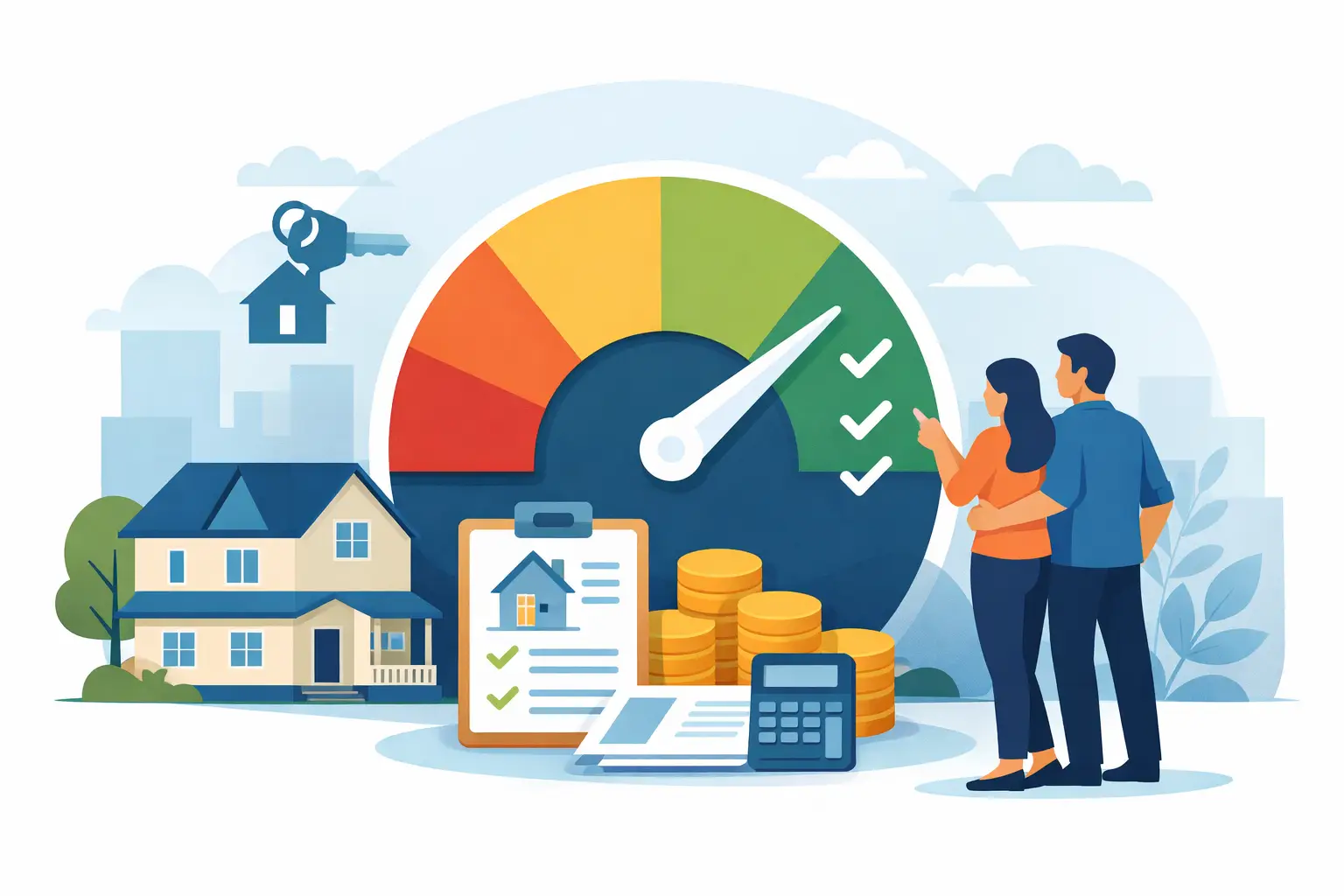
If you’re asking que puntaje necesito para hipoteca, you’re probably not looking for a textbook answer. You want to know whether your score is good enough to buy now, whether you should wait, and what lenders will actually look at when the numbers hit the screen. The honest answer is that credit score matters, but it is not the whole approval story.
For most buyers, the minimum score depends on the loan program, the size of your down payment, your debt-to-income ratio, and how strong the rest of your file looks. A borrower with a lower score may still qualify with the right loan structure, while someone with a higher score can still run into trouble if monthly debts are too high or income is hard to document.
So, que puntaje necesito para hipoteca in real terms?
A practical starting point is this: many conventional loans usually want at least a 620 credit score. FHA loans can sometimes work with lower scores, often starting around 580 for borrowers who want to make a lower down payment. VA and USDA loans do not always set the same hard minimums at the government level, but lenders often apply their own score requirements, commonly in the low- to mid-600s.
That gives you a range, not a promise. Mortgage guidelines vary by lender, and they can shift based on market conditions. Even when a program allows a lower score, the approval may come with tighter requirements elsewhere, such as more cash reserves, lower debt ratios, or stronger proof of stable income.
If your score is 740 or higher, you’re generally in a strong position for pricing. If you’re between 680 and 739, you may still qualify for solid options. Between 620 and 679, home financing is often still possible, especially with the right loan type, but pricing and mortgage insurance costs may be less favorable. Below 620, options narrow, but they do not always disappear.
Credit score ranges and what they usually mean
Lenders are not just asking whether you can borrow. They are measuring risk. Your credit score helps them estimate how likely you are to repay on time, and that affects both approval and cost.
A higher score often leads to lower rates, lower monthly payments, and more flexibility in loan choices. A lower score can still lead to approval, but usually with more conditions attached. That is why two borrowers buying similar homes can receive very different loan terms.
Here is the part many buyers miss: a score that gets you approved is not always the score that gets you the best deal. If you’re right on the edge of qualifying, buying now may still make sense, especially if home prices or rates are moving against you. But if a small credit improvement could save you meaningful money each month, waiting a little may be the smarter move.
Conventional loans
Conventional financing is often a good fit for buyers with stronger credit and stable income. The commonly cited minimum is 620, but that does not mean every 620 score gets approved. Automated underwriting looks at the entire picture, including debt, assets, and payment history.
If you’re aiming for a conventional loan, stronger scores usually help in two ways. First, you may qualify more easily. Second, you may get better pricing and lower private mortgage insurance costs when putting down less than 20%.
FHA loans
FHA loans are popular with first-time buyers because they are more flexible on credit and down payment. Many borrowers can qualify with scores starting around 580 if they meet other guidelines. In some cases, lower scores may still be considered, but that often requires a larger down payment and a much stronger overall file.
FHA can be a strong path for buyers who have had past credit issues but are now back on track. The trade-off is that mortgage insurance is part of the equation, so the monthly payment needs to be reviewed carefully.
VA loans
VA loans are one of the strongest options available for eligible veterans, active-duty service members, and some surviving spouses. These loans can offer no down payment and no monthly mortgage insurance, which makes them especially attractive.
There is no single government-set minimum score in the way many buyers expect, but lenders commonly set their own benchmarks. In practice, many borrowers find that a score in the low- to mid-600s is a useful target. If the rest of the file is strong, some flexibility may exist.
USDA loans
USDA loans can be a smart option for eligible rural and suburban buyers, including many areas outside major city centers. Like VA loans, these programs can be very affordable, often with little to no down payment required.
Credit expectations vary, but many lenders look for scores around 640 for smoother automated approval. Lower scores may still be reviewed manually, though that typically means more documentation and closer scrutiny.
What matters beyond your score
If you’re focused only on the answer to que puntaje necesito para hipoteca, you may miss the other factors that carry just as much weight.
Your debt-to-income ratio is one of them. If too much of your monthly income is already committed to car loans, credit cards, student loans, or personal loans, qualifying becomes harder even with decent credit. On the other hand, a moderate score paired with low debt can be more workable than buyers expect.
Your employment and income history also matter. Lenders want to see stable, documentable income. That does not mean you need to have the same exact job forever, but frequent changes, variable earnings, or self-employment can require a closer review.
Your down payment and cash reserves help too. More money down can reduce risk in the lender’s eyes. It may also improve your pricing or open up options that would not be available with a minimal down payment.
Finally, your recent credit behavior matters as much as the score itself. Late payments, collections, charge-offs, and high revolving balances can all affect the file differently. A 640 score built on old, resolved issues may be treated differently than a 640 score with fresh delinquencies.
If your score is lower than you hoped
This is where many buyers give up too early. A lower score does not always mean no. It may simply mean you need the right strategy.
Start by reviewing your credit reports for errors. Incorrect late payments, duplicate accounts, and outdated balances can drag your score down more than they should. Next, focus on credit card balances. Paying revolving debt down can sometimes improve scores faster than people expect, especially if cards are close to their limits.
Avoid applying for new credit before a mortgage. A new car loan, personal loan, or retail card can change your debt ratios and your score at the same time. Keep making every payment on time, and do not close old accounts unless a mortgage professional tells you it makes sense for your situation.
If you’re close to qualifying, a targeted plan can go a long way. Sometimes the best move is not a major financial overhaul. It may be paying down one card, waiting for one reporting cycle, or choosing a loan program that better fits your profile.
When it makes sense to get pre-qualified
You do not need perfect credit to start the conversation. In fact, getting pre-qualified early can save time and reduce guesswork. A mortgage review can show whether you’re ready now, what loan programs fit, and whether improving your score would materially change your payment.
That matters a lot in markets where affordability shifts quickly. For buyers in Texas communities like San Antonio, New Braunfels, or the surrounding areas, knowing your real numbers early can help you shop with more confidence and avoid surprises once you’re under contract.
A good mortgage advisor should not just quote a score minimum and send you away. They should explain your options, the trade-offs between loan types, and what changes would help if you’re not quite ready yet. That kind of guidance is where a brokerage model can be especially useful, because one borrower may fit better with one lender’s guidelines than another’s.
Propi Mortgage works with buyers who need that kind of practical, personalized review – not just a generic answer pulled from a chart.
The better question to ask
Instead of only asking que puntaje necesito para hipoteca, ask this: what score do I need for the payment, loan type, and home price I want? That is usually the more useful question.
A credit score is not just a gate. It affects cost, flexibility, and how comfortable your monthly payment will feel after closing. Some buyers are ready now with the score they already have. Others are a few smart adjustments away from a better loan.
The right next step is not guessing. It is getting your numbers reviewed by someone who can show you what is possible today and what could improve with a little time. Homeownership does not always require perfect credit, but it does reward a clear plan.