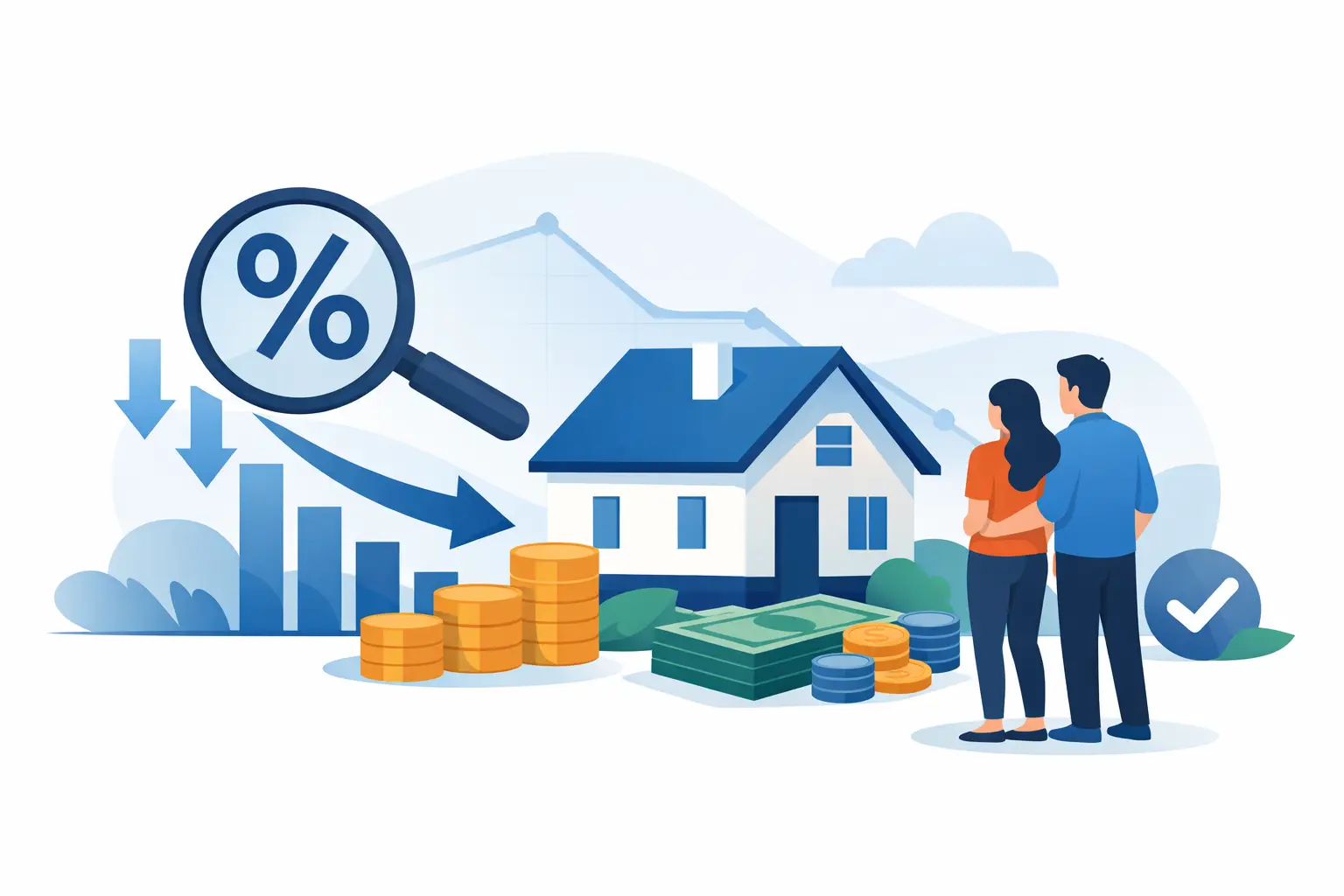
A home can be a great fit for your family and still feel just outside the monthly payment you want. A rate buydown is one way to bridge that gap. It allows a buyer, seller, builder, or another approved party to pay money upfront in exchange for a lower mortgage interest rate, either for the first few years of the loan or for its entire term.
For buyers in competitive Texas markets, a buydown can make an offer more attractive without asking the seller to reduce the purchase price. But it is not automatically the best answer for every borrower. The right choice depends on who is paying, how long you expect to own the home, your cash-to-close needs, and how the loan is structured.
What Is a Rate Buydown?
A rate buydown is an upfront payment that reduces the interest rate charged on a mortgage. The money is generally paid at closing and is reflected in the loan paperwork. In many purchase transactions, the seller or builder offers the funds as a concession to help the buyer manage the initial payment.
There are two main types: a temporary buydown and a permanent buydown. Both can lower your payment, but they do it in very different ways.
A temporary buydown lowers your interest rate for a limited period, often one, two, or three years. After that period ends, the rate and payment increase to the loan’s original note rate. A permanent buydown lowers the note rate for the life of the loan, typically through discount points.
The idea sounds simple, but the details matter. A lower early payment may create more breathing room while you adjust to homeownership. A permanent lower rate may make more sense when you plan to keep the mortgage for many years. Neither option changes the need to choose a payment that remains comfortable after property taxes, homeowners insurance, and any homeowners association dues are included.
How Temporary Rate Buydowns Work
Temporary buydowns are commonly described by their payment schedule. A 2-1 buydown is the format many homebuyers encounter most often.
With a 2-1 buydown, the interest rate is reduced by 2 percentage points in year one and by 1 percentage point in year two. In year three, the loan moves to the full note rate for the remainder of the term. For example, if the note rate is 6.50%, the payment is calculated at 4.50% in the first year, 5.50% in the second year, and 6.50% beginning in the third year.
A 1-0 buydown reduces the rate by 1 percentage point for the first year only. A 3-2-1 buydown may reduce the rate for three years, stepping up one percentage point each year until it reaches the note rate. Not every loan program, lender, or transaction supports every buydown structure.
The party funding the buydown pays the difference between the reduced payment and the payment due at the note rate. Those funds are typically placed into an account at closing and applied to the monthly payment during the buydown period. The borrower is still responsible for making the scheduled payment each month.
One point that surprises some buyers: qualifying for the mortgage may still be based on the full note rate rather than the temporary reduced rate. Guidelines vary by loan type and borrower profile, but a temporary buydown is generally not a way to qualify for a home you cannot afford once the reduced period ends.
When a Temporary Buydown Can Help
A temporary buydown can be useful when the higher future payment is already realistic for your budget. Perhaps you expect a documented promotion, your spouse will return to work, or you are selling another property and want to preserve cash during the transition. It can also be appealing when a seller is motivated to contribute but does not want to reduce the contract price.
It is less helpful if the lower first-year payment is the only way the home fits your budget. The payment increase is not optional, and refinancing later is never guaranteed. Rates, home values, income, credit, and loan guidelines can all change.
Permanent Buydowns and Discount Points
A permanent buydown is usually completed by paying discount points at closing. One discount point equals 1% of the loan amount. On a $400,000 loan, one point costs $4,000. The actual rate reduction you receive for that cost is not fixed. It changes with market conditions, loan program, credit profile, down payment, occupancy, and lender pricing.
Unlike a temporary buydown, a permanent buydown reduces the rate for the full life of the loan. That means the principal-and-interest payment stays lower for as long as you keep that mortgage. It can be especially worthwhile for a buyer who expects to remain in the home and retain the loan long enough to recover the upfront cost through monthly savings.
The key question is the break-even period. If paying $4,000 in points saves $100 per month, the simple break-even point is about 40 months. If you sell, refinance, or pay off the loan before then, you may not recover the cost through payment savings. The calculation is only one part of the decision, but it gives you a practical starting point.
A permanent buydown may also be funded by a seller or builder when allowed by the loan program and within applicable contribution limits. Those limits can vary based on the type of mortgage, occupancy, and down payment. Your loan advisor can help confirm what is permitted before you write an offer around a specific concession.
Buydown Versus a Price Reduction
When a seller has room to negotiate, buyers often ask whether they should request a lower price or a rate buydown. The better choice depends on your goal.
A price reduction lowers the amount you borrow, but a modest reduction may have a smaller effect on the monthly payment than many buyers expect. A seller-paid temporary buydown can create more noticeable payment relief in the first one or two years. That can be valuable for a buyer who needs time to settle into a new budget.
On the other hand, a lower purchase price can reduce your loan balance, potentially lower cash requirements, and provide lasting value. If you are close to a loan-to-value threshold, a price reduction may also improve the overall loan structure. There is no universal winner. Reviewing both options side by side is usually more useful than choosing based on the headline number alone.
Questions to Ask Before Accepting a Buydown
Before moving forward, ask who is paying for the buydown and whether that contribution affects other negotiations. A seller credit is not unlimited, and using it for a buydown may leave less available for closing costs, prepaid taxes, insurance, or repairs.
You should also ask for the payment at every stage, including the full payment once a temporary buydown expires. Look beyond principal and interest. Your total housing payment should account for estimated property taxes, homeowners insurance, mortgage insurance when applicable, and association dues.
Finally, understand the terms if you refinance or sell early. For a temporary buydown, unused funds may be handled according to the loan documents and program rules. They are not simply a cash refund. Getting a clear answer before closing helps prevent surprises later.
Building a Payment Plan That Holds Up
A rate buydown can be a smart negotiating tool, especially when sellers or builders are offering concessions. It can also be an expensive add-on if it is used without a clear plan. The best approach is to compare the upfront cost, the payment at each stage, your likely time in the home, and the alternatives available with the same funds.
At Propi Mortgage, we help buyers compare loan scenarios in plain language so the payment on closing day is not the only number that makes sense. Before making an offer, ask to see the numbers with no buydown, a temporary buydown, a permanent buydown, and a price reduction. A home purchase should support the life you are building, not create a payment surprise a few years down the road.